TL;DR
Vault Desktop represents a shift from KeepKey's previous reliance on a hosted site and browser extension to a local-first, wallet-only model. Key enhancements include a default-off API bridge and a slimmer software footprint, drastically reducing the attack surface. This transition underscores KeepKey's commitment to improving security and user control over digital assets.
The Old Model and Its Risks (Hosted Site + Browser Extension)
In the past, KeepKey users interacted with their devices via the vault.keepkey.com website and a browser extension. This model, while functional, carried inherent risks:
-
Third-Party Dependencies: Operating through a hosted site meant relying on external servers, increasing the risk of man-in-the-middle attacks and exposing users to potential server-side vulnerabilities. For instance, if the server hosting the website were compromised, attackers could potentially intercept communications or serve malicious content to users.
-
Browser-Based Vulnerabilities: Browser extensions, while convenient, are susceptible to a range of attacks, including phishing and malicious code injection, due to their integration within the browser environment. A compromised browser extension could lead to unauthorized access to your hardware wallet or the exposure of sensitive financial data.
-
Increased Complexity: Managing operations through multiple layers of software—from the browser to the extension to the hardware—introduced additional points of failure and complexity. Each component could be a potential target for attackers, and the more complex the system, the harder it is to secure every part.
What Vault Desktop Changes
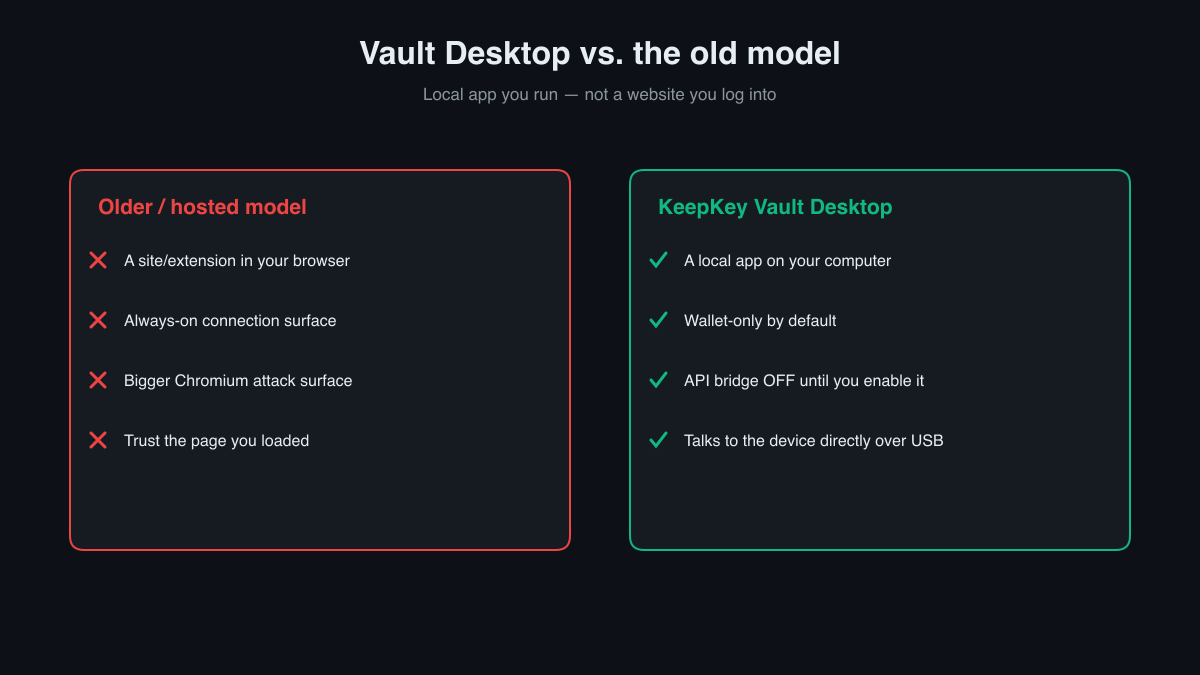
Vault Desktop is a local application that eliminates the need for a web interface or browser extension. This change significantly bolsters security by:
-
Local Execution: The app runs directly on your computer, interacting with your KeepKey over a USB connection. This local-first approach removes the risks associated with external server dependency. By keeping operations on your machine, data doesn't traverse the internet, reducing exposure to potential interception.
-
Direct Interaction: By communicating directly with the KeepKey device, Vault Desktop minimizes the attack surface that was previously exposed by browser-based operations. Imagine no longer having to worry about a browser exploit targeting your wallet—everything is contained within your local environment.
-
Wallet-Only By Default: Vault Desktop is designed to function primarily as a wallet interface, giving users more control over their interactions with their hardware. This streamlining ensures that users are less likely to unintentionally expose their assets to risk by engaging with unnecessary features or third-party services.
Local-First and Wallet-Only By Default
Local Control: Vault Desktop's architecture allows users to manage their cryptocurrency without needing to log into a website. This shift to local execution enhances privacy and security by keeping sensitive operations off the internet. For example, when accessing your wallet, the transactions and data remain within your device, shielding them from potential online threats.
Wallet-Only Approach: By focusing on core wallet functionalities as the default setting, Vault Desktop ensures that your experience remains streamlined and secure. Users can opt-in to additional functionalities, like the API bridge, only when necessary. This opt-in model empowers users to customize their setup according to their security preferences and use cases.
Optional API Bridge: The API bridge, which allows third-party applications to interact with Vault Desktop, is off by default. This design choice aligns with security best practices by limiting potential exposure to vulnerabilities unless explicitly enabled by the user. For instance, a user might enable the API bridge to integrate a specific application but can rest assured knowing that until they do, their setup remains as secure as possible.
A Smaller Attack Surface
Vault Desktop is built on Electrobun, a combination of Bun and the system's WebView, rather than shipping with a full Chromium browser. This reduces the software's footprint and, consequently, its susceptibility to exploits:
-
Reduced Dependencies: By not including a full-blown browser, Vault Desktop minimizes external dependencies that could introduce vulnerabilities. Each additional software component is a potential risk, and by reducing the number of these components, Vault Desktop inherently becomes more secure.
-
Focused Functionality: The use of system WebView for rendering ensures that the application remains lightweight and secure, focusing solely on necessary functions without the bloat of a complete browser engine. This focus means fewer updates and patches are required, reducing the chance of introducing new vulnerabilities.
-
Enhanced Security: A smaller attack surface means fewer potential entry points for malicious actors, bolstering the overall security of your cryptocurrency management. This reduction in complexity is a critical step toward ensuring that your digital assets remain safe from evolving threats.
Takeaway
Vault Desktop marks a pivotal evolution in KeepKey's approach to cryptocurrency management. By transitioning to a local-first, wallet-only model with a reduced attack surface, it prioritizes user security and sovereignty. Users now enjoy a more secure environment for managing digital assets, free from the dependencies and vulnerabilities of a browser-based system. For more insights into the KeepKey ecosystem, explore what KeepKey Vault is and why it exists, Vault Desktop's security model, and what's inside KeepKey.
By understanding these changes, users can confidently navigate the complexities of digital finance, knowing their assets are protected by a robust and privacy-focused platform. This evolution represents not just a technical enhancement but a commitment to empowering users to take control of their financial sovereignty.